Smoothiepussit: A Complete Guide to Smoothie Pouches, Benefits, Uses, Nutrition, and Smart Choices
Smoothies have become a popular part of everyday eating in the United States. They can be a quick breakfast, an afternoon snack, a post-workout drink, or an easy way to combine fruits and vegetables in one meal. However, making smoothies at home can sometimes feel like more work than expected. You have to prepare ingredients, measure portions, use a blender, wash dishes, and find a convenient way to carry the finished drink.
This is where the idea behind smoothiepussit becomes interesting.
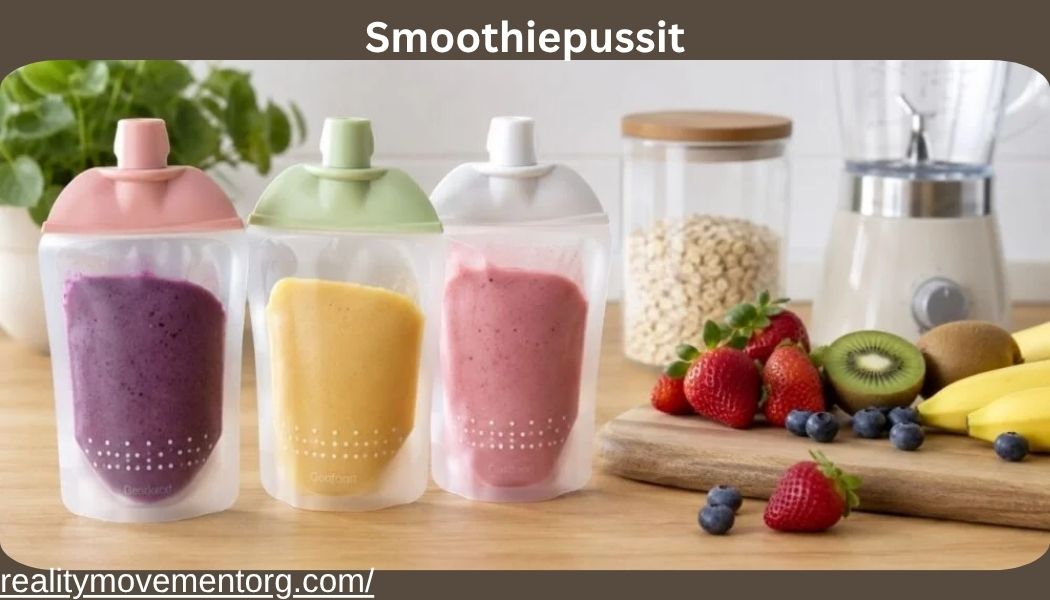
The term “smoothiepussit” is an emerging phrase found online in connection with smoothie pouches, portable smoothie containers, and pre-portioned smoothie ingredient packs. Current online sources do not appear to use the term in one single standardized way. Some describe smoothiepussit as reusable pouches that hold finished smoothies, while others use the term for freezer-ready ingredient packs that are blended later.
That difference matters because a smoothie pouch and a freezer smoothie pack serve different purposes.
A reusable pouch is mainly about portability and storage. A freezer pack is mainly about preparation and convenience. Both, however, are based on the same basic idea: make smoothies easier to fit into a busy lifestyle.
This guide explains what smoothiepussit can mean, how the concept works, its possible benefits and limitations, how to prepare smoothie pouches safely, what ingredients work well, how to choose better products, and what US consumers should know about nutrition and food safety.
What Is Smoothiepussit?
Smoothiepussit is best understood as a term associated with convenient smoothie pouches or smoothie preparation packs.
In the simplest sense, it describes a system that makes smoothies easier to prepare, store, transport, or consume.
There are two common interpretations.
The first is a reusable smoothie pouch. This is a flexible food-safe container that can be filled with a prepared smoothie. It normally has an opening for filling and a secure cap, zipper, or closure. The smoothie can then be carried to work, school, the gym, or another destination.
The second interpretation is a smoothie ingredient pouch or freezer smoothie pack. Instead of containing a finished smoothie, the pouch contains measured ingredients such as berries, banana, spinach, mango, or other foods. The ingredients are stored until they are ready to be blended.
Some online descriptions combine both ideas and use smoothiepussit as a broader term for portable smoothie preparation and storage.
Because the term is still relatively uncommon, consumers should not assume that every product labeled or described as smoothiepussit has identical features.
The practical question is always: What exactly is inside the pouch, what material is it made from, and how is it designed to be used?
Why Is Smoothiepussit Becoming More Interesting?
The popularity of smoothie-related products is closely connected to a larger change in eating habits.
People are looking for foods that fit around real schedules.
A person may want a nutritious breakfast but have only ten minutes before work. A parent may need a simple snack for a child. A college student may want something portable between classes. Someone who exercises may want a convenient drink after a workout.
Traditional smoothie preparation can create friction.
You need ingredients, preparation time, a blender, a container, and cleanup.
A smoothie pouch can reduce some of these steps.
This is an important point that is sometimes missed in discussions about smoothie convenience. The biggest advantage is not necessarily that a pouch makes a smoothie more nutritious. Its main value is that it can make a nutritious choice easier to repeat.
That difference is important.
A convenient container cannot turn an unhealthy smoothie into a healthy one. But a convenient system may help someone prepare balanced smoothies more consistently.
Smoothiepussit and the Meaning of Convenience
Convenience is one of the strongest reasons people choose portable food products.
A well-designed smoothie pouch can make several parts of the process easier.
It can reduce the need for a traditional cup.
Also Read:MCAT Score Calculator: How to Calculate Your MCAT Score and Understand Your Results
It can make transportation easier.
It can help with portion control.
It can reduce spills when properly sealed.
A reusable pouch can also reduce the need to repeatedly purchase single-use containers.
For families, convenience can be especially useful. A child may be more willing to consume fruit or yogurt from a fun, easy-to-use pouch than from a traditional container.
Adults can also use pouches for breakfast smoothies, fruit blends, yogurt drinks, or other soft foods.
However, convenience should not be confused with quality.
A pouch is simply a container or preparation method. The nutritional quality depends largely on what goes inside it.
How Smoothiepussit Works
The process depends on the type of pouch being used.
For a reusable smoothie pouch, the basic process is simple.
First, prepare the smoothie.
Next, allow the smoothie to reach an appropriate temperature before filling the container.
Pour the smoothie into the pouch without overfilling it.
Close the pouch securely.
Store it appropriately if it will not be consumed immediately.
When ready, drink directly through the opening or pour the smoothie into another container.
A freezer smoothie pack works differently.
The ingredients are washed, prepared, measured, and placed into a suitable freezer-safe container. The pack is frozen and later added to a blender with the chosen liquid.
This approach can save time because several smoothies can be prepared at once.
For example, someone might prepare five smoothie packs on Sunday and use one each weekday.
Reusable Smoothie Pouches vs. Freezer Smoothie Packs
Understanding this difference makes the smoothiepussit concept much easier to understand.
Reusable smoothie pouches are designed primarily for carrying and consuming prepared food.
Freezer smoothie packs are designed primarily for storing ingredients before blending.
Reusable pouches are useful for:
- Work
- School
- Travel
- Gym sessions
- Outdoor activities
- Packed snacks
- Homemade smoothies
Freezer packs are useful for:
- Weekly meal preparation
- Faster morning routines
- Portion control
- Reducing food waste
- Organizing smoothie ingredients
Some households may use both.
For example, a person could prepare frozen ingredient packs at the beginning of the week and transfer the finished smoothies into reusable pouches when needed.
That creates a complete smoothie-preparation system rather than simply buying a container.
What Ingredients Work Well in Smoothiepussit?
One of the best features of homemade smoothie pouches is flexibility.
You can build a smoothie according to your taste and nutritional needs.
Fruit is a common starting point.
Popular options include:
- Bananas
- Strawberries
- Blueberries
- Raspberries
- Mango
- Pineapple
- Peaches
- Apples
- Cherries
- Blackberries
Vegetables can also be included.
Spinach is especially easy to blend because its flavor can be mild when combined with fruit.
Other possibilities include:
- Kale
- Carrots
- Cooked pumpkin
- Cucumber
- Cooked beet
- Avocado
The liquid base also changes the final result.
Water creates a lighter smoothie.
Milk can add protein and other nutrients.
Unsweetened soy milk can provide plant-based protein.
Unsweetened almond milk can create a lighter texture.
Coconut water can provide a different flavor profile.
Yogurt can make the smoothie thicker and creamier.
The best choice depends on dietary needs, taste, and the rest of the meal.
Adding Protein to a Smoothiepussit Recipe
A fruit-only smoothie can be enjoyable, but it may not always provide enough protein to keep someone satisfied for long.
Protein can come from several sources.
Greek yogurt is one option.
Milk can also contribute protein.
Soy milk is another useful choice.
Nut or seed butters can add protein along with fat.
Chia seeds and hemp seeds can also be included.
Protein powder may be useful for some adults, but it should not automatically be added to every smoothie.
A balanced diet is more important than turning every smoothie into a high-protein drink.
For people who exercise regularly, protein needs can vary considerably based on body size, activity level, overall diet, and personal goals.
Fiber and Smoothiepussit
Fiber is another important part of a well-designed smoothie.
Whole fruits and vegetables naturally contain fiber.
When making a smoothie, using the whole edible fruit instead of only fruit juice can help retain more of the food’s natural structure and fiber.
Ingredients such as berries, pears, apples, chia seeds, flaxseed, oats, and leafy greens can contribute fiber.
Fiber is also one of the nutrients the FDA identifies as a nutrient Americans may need more of.
This does not mean every smoothie needs to contain large amounts of fiber.
A better approach is balance.
If a smoothie already contains several high-fiber ingredients, adding even more may make it overly thick or uncomfortable for some people.
Are Smoothiepussit Healthy?
There is no simple yes-or-no answer.
The pouch itself is not what makes a smoothie healthy.
The ingredients and overall eating pattern matter much more.
A smoothie made from whole fruit, vegetables, plain yogurt, and an appropriate liquid can be a nutrient-rich choice.
A smoothie made mostly from sweetened juice, syrups, flavored yogurt, and other sweet ingredients can contain a large amount of sugar and calories.
This is why consumers should evaluate the recipe rather than the marketing language.
The FDA explains that total sugars include naturally occurring sugars from foods such as fruit and milk, while added sugars are sugars introduced during processing or added as ingredients. The FDA also recommends using the Nutrition Facts label to understand how much added sugar a packaged food contains.
This distinction is particularly important for commercial smoothie products.
Natural Sugar vs. Added Sugar
A banana contains naturally occurring sugar.
A strawberry contains naturally occurring sugar.
Milk contains naturally occurring lactose.
These sugars are different from sugar added during food processing.
The Nutrition Facts label separates total sugars from added sugars so consumers can understand the difference.
For a packaged smoothie pouch, checking added sugar can be useful.
For a homemade smoothie, the consumer controls the ingredients.
That makes homemade smoothiepussit-style preparation attractive for people who want more control over their food.
How to Build a More Balanced Smoothiepussit
A simple smoothie formula can make preparation easier.
Think of the smoothie as having several basic parts:
Fruit provides flavor.
Vegetables can increase variety.
A protein source can improve satiety.
A fiber-rich ingredient can support a more filling meal.
A liquid provides the desired texture.
A healthy fat can contribute richness.
You do not need every category in every smoothie.
A practical example might be:
Banana + berries + plain Greek yogurt + spinach + milk.
Another combination could be:
Mango + pineapple + spinach + unsweetened soy milk + chia seeds.
For a more filling breakfast, oats or nut butter could be added.
The key is to avoid automatically adding multiple sweeteners just because the smoothie contains fruit.
Smoothiepussit for Busy Mornings
Busy mornings are one of the strongest use cases for smoothie preparation systems.
Instead of making decisions every morning, you can prepare ingredients in advance.
For example, prepare five ingredient combinations on the weekend.
Place each combination into its own suitable freezer container.
Label each pack with the smoothie name.
In the morning, add the contents to a blender.
Add the preferred liquid.
Blend.
Pour into a reusable smoothie pouch if desired.
This turns smoothie preparation into a routine rather than a daily project.
The psychological advantage can be just as important as the time-saving advantage.
When healthy ingredients are already prepared, there are fewer barriers to using them.
Smoothiepussit for Work
A reusable smoothie pouch can be useful for people who do not have time for a full breakfast before leaving home.
Prepare the smoothie at home and place it in an appropriate insulated lunch bag or refrigerator when necessary.
The important issue is temperature control.
A smoothie containing dairy, yogurt, or other perishable ingredients should not simply sit at room temperature for long periods.
Food safety should always come before convenience.
Smoothiepussit for School Lunches
Parents may also find smoothie pouches useful for children.
A pouch can make soft foods easier to carry and consume.
However, parents should consider age-appropriate design, choking risks, ingredient allergies, temperature control, and cleaning.
For young children, the pouch opening should be appropriate for the child’s age and ability.
Parents should also avoid treating a smoothie pouch as a replacement for an overall balanced diet.
A smoothie can be one part of a meal or snack.
It does not need to contain every nutrient a child needs.
Smoothiepussit for Fitness and Exercise
Smoothies are often associated with fitness because they can be customized.
A post-workout smoothie may include carbohydrates from fruit and protein from yogurt, milk, soy products, or another protein source.
However, not every workout requires a specialized smoothie.
For short or low-intensity exercise, a normal meal pattern may be enough.
The value of a smoothie pouch for active people is often convenience.
A portable container can be easier to carry than a large bottle or food container.
The smoothie can be prepared in advance and consumed when appropriate.
How to Choose a Good Smoothiepussit Pouch
If you are purchasing a reusable smoothie pouch, look beyond appearance.
Several features matter.
Food-Safe Materials
Choose products designed specifically for food use.
If a manufacturer states that a product is BPA-free, dishwasher-safe, freezer-safe, or suitable for certain temperatures, check the manufacturer’s instructions rather than assuming those features apply to every pouch.
Strong Closure
A weak closure can turn a convenient smoothie pouch into a serious mess.
Look for a secure cap, zipper, or sealing mechanism.
Easy Cleaning
This is one of the most important features.
A pouch with narrow areas that are difficult to clean can become inconvenient very quickly.
Smoothie residue can remain in corners and around seals.
A product that is easy to open fully is often more practical than one with a complicated design.
Leak Resistance
Leak resistance matters when the pouch will be carried inside a backpack, lunch bag, or gym bag.
Test the closure before placing it next to clothing, electronics, or important documents.
Appropriate Capacity
A very large pouch is not always better.
The ideal size depends on whether the pouch is being used for a snack, breakfast, or larger serving.
Why Cleaning Matters So Much
Smoothies contain moisture and organic ingredients.
If residue remains inside a reusable pouch, microorganisms can grow.
Cleaning should therefore be treated as part of using a smoothie pouch, not as an optional extra.
Follow the manufacturer’s cleaning instructions.
If the pouch is dishwasher-safe, use the dishwasher according to those instructions.
If it must be hand-washed, open all removable parts and clean them thoroughly.
Pay special attention to:
- Caps
- Seals
- Threads
- Corners
- Spouts
- Valves
- Zippers
Allow the pouch to dry completely before storing it.
A damp, closed pouch is not an ideal storage environment.
Food Safety When Preparing Smoothiepussit
Food safety is especially important when using fresh fruits, vegetables, dairy, or other perishable ingredients.
The FDA explains that fresh produce can become contaminated with harmful bacteria during growing, harvesting, storage, or preparation. It recommends washing produce under running water before eating or preparing it.
Do not use soap, bleach, or household detergents to wash fresh produce.
Instead, rinse produce properly under running water.
If you are using juice, pay attention to whether it has been pasteurized.
The FDA notes that smoothies made with unpasteurized juice have been associated with foodborne illness outbreaks and recommends pasteurized juice for safety.
This is particularly important for children, older adults, pregnant people, and individuals with weakened immune systems.
Should You Freeze Smoothiepussit?
Some smoothie pouches are designed for freezing, while others are not.
Never assume a reusable pouch can safely go into a freezer simply because it looks durable.
Check the manufacturer’s instructions.
If the pouch is not designed for freezing, use an appropriate freezer-safe container for ingredient storage.
Freezing fruit and vegetables can make smoothie preparation easier.
However, texture may change after freezing and thawing.
For this reason, many people prefer to freeze smoothie ingredients rather than freeze a fully blended smoothie.
Fresh Smoothiepussit vs. Frozen Smoothiepussit
Both approaches have advantages.
Fresh smoothies usually provide a bright flavor and freshly blended texture.
Frozen ingredient packs are more convenient for meal preparation.
A frozen smoothie may be thicker after blending.
Some ingredients, such as bananas and berries, work particularly well in frozen smoothie preparations.
Leafy greens can also be prepared in advance, although texture and flavor can change depending on storage time.
The best method is the one that fits your routine.
How Smoothiepussit Can Reduce Food Waste
One interesting advantage of planned smoothie preparation is its potential to reduce household food waste.
A banana that is becoming overripe does not necessarily need to be thrown away.
It can be peeled, cut, and frozen for later smoothies.
Berries that are approaching the end of their best quality can also be frozen.
Spinach that will not be used in a salad may be incorporated into smoothie packs.
This creates a practical food-management strategy.
Instead of thinking about smoothie pouches only as a convenience product, you can think of them as a way to organize ingredients before they become waste.
However, freezing does not make spoiled food safe.
Ingredients should be fresh and suitable for consumption before freezing.
Smoothiepussit and Portion Control
Portion size can be easier to manage when ingredients are pre-measured.
This can be useful for people who prefer consistency.
For example, instead of randomly adding fruit each morning, you could create similarly sized smoothie packs.
That makes nutritional estimates easier.
Still, portion control should not become an obsession.
Individual energy needs differ.
A smoothie that is appropriate as a snack for one person may be appropriate as breakfast for another.
The best approach is to consider the smoothie within the context of the entire day’s food intake.
Common Mistakes When Making Smoothiepussit
Several mistakes can reduce the benefits of a smoothie preparation system.
One common mistake is adding too much sweetener.
Fruit already provides sweetness.
Another is using fruit juice as the main liquid and then adding additional sweeteners.
A third mistake is ignoring protein.
A fruit-heavy smoothie may taste excellent but may not be satisfying enough to serve as a complete breakfast.
Another problem is overfilling the pouch.
This can make sealing difficult and increase the chance of leakage.
Poor cleaning is another major issue.
A reusable pouch should be cleaned thoroughly after every use.
Finally, people sometimes prepare too many smoothies without considering storage time.
Meal preparation is helpful, but food should still be stored and handled safely.
Is Smoothiepussit Better Than a Traditional Smoothie Bottle?
Not necessarily.
They serve slightly different purposes.
A traditional bottle can be easier to clean, especially if it has a wide opening.
A smoothie pouch may be lighter and more flexible.
A bottle can be easier to reuse for water and other drinks.
A pouch may be easier for children to use.
The right choice depends on your priorities.
If durability and easy cleaning are the most important features, a bottle may be better.
If flexibility and portability matter more, a pouch may be more attractive.
Is Smoothiepussit Eco-Friendly?
This question requires careful thinking.
Reusable products can potentially reduce single-use packaging waste because they are used repeatedly.
But reusable does not automatically mean environmentally superior in every situation.
The environmental impact depends on factors such as:
- How long the product lasts
- What material it uses
- How often it is reused
- How it is washed
- Whether it can be recycled
- How it is manufactured
- Whether it replaces disposable products
A durable pouch that is used hundreds of times can have a very different environmental profile from a disposable pouch used once.
Therefore, consumers should look beyond marketing terms such as “green” or “eco-friendly.”
Disposable Smoothie Pouches
Disposable pouches can be convenient.
They are often lightweight and require no washing.
However, repeated use can create more packaging waste.
For households that regularly consume smoothies, reusable products may be worth considering.
The important thing is to choose a product that will actually be reused.
Buying a reusable pouch and rarely using it does not provide the same practical benefit as replacing many disposable containers with one durable product.
How to Make Smoothiepussit More Affordable
Smoothies can become expensive if every ingredient is purchased specifically for one recipe.
A better approach is to use flexible ingredients.
Buy fruits that are in season.
Use frozen berries when fresh berries are expensive.
Freeze ripe bananas before they go bad.
Purchase larger containers of plain yogurt when practical.
Use basic ingredients instead of expensive specialty powders.
The biggest savings may come from reducing food waste.
If smoothie ingredients are consistently used before they spoil, the overall cost can become easier to manage.
A Simple Smoothiepussit Breakfast Recipe
A basic breakfast smoothie can be made with:
- One banana
- One cup of berries
- Half a cup of plain Greek yogurt
- One cup of milk or unsweetened soy milk
- A small handful of spinach
- Optional chia seeds
Blend until smooth.
If the mixture is too thick, add more liquid.
If it is too thin, add more fruit or yogurt.
This type of recipe provides a combination of carbohydrates, protein, fiber, and other nutrients without requiring a long ingredient list.
For a portable option, transfer it into a clean reusable smoothie pouch.
A Green Smoothiepussit Recipe
For people who want more vegetables, try:
- One banana
- One handful of spinach
- Half an avocado
- One cup of unsweetened soy milk
- A few pieces of pineapple
- Optional chia seeds
The banana and pineapple provide sweetness, while spinach adds vegetables.
Avocado can create a creamy texture.
The recipe can be adjusted according to personal taste.
A Berry Smoothiepussit Recipe
A simple berry combination can include:
- Strawberries
- Blueberries
- Banana
- Plain yogurt
- Milk or unsweetened soy milk
Frozen berries can make the smoothie cold and thick without requiring much ice.
If using frozen fruit, make sure your blender is suitable for the ingredients and follow its instructions.
Smoothiepussit for Kids: What Parents Should Consider
Children can enjoy smoothies, but parents should focus on overall dietary variety.
A smoothie should not become the only way a child eats fruit or vegetables.
Whole foods also provide important eating experiences, including different textures and chewing.
Parents should also consider added sugar.
Sweetened yogurt, flavored milk, syrups, and juice can quickly increase the sugar content.
The FDA recommends paying attention to added sugars on packaged food labels because too much added sugar can make it harder to meet nutrient needs within an appropriate calorie intake.
For young children, parents should also follow age-appropriate feeding and choking guidance.
Smoothiepussit for Adults
Adults can use smoothie pouches for many different purposes.
Someone working from home might prepare a smoothie as a quick breakfast.
An office worker might carry one to work.
A traveler might use a pouch for a homemade snack where safe refrigeration is available.
A fitness enthusiast might prepare a smoothie after exercise.
The flexibility is one of the strongest aspects of the concept.
The same basic container can support very different eating routines.
What Smoothiepussit Cannot Do
It is also important to understand the limitations.
Smoothiepussit cannot automatically make a diet healthy.
It cannot replace vegetables in every meal.
It cannot eliminate the need for food safety.
It cannot make excessive added sugar harmless.
It cannot guarantee weight loss.
It cannot replace professional dietary advice for people with specific medical or nutritional requirements.
This is why the smartest way to use the concept is as a practical food-preparation tool rather than a miracle health solution.
How to Read a Packaged Smoothie Label
If you purchase a ready-made smoothie pouch, read the Nutrition Facts label.
Start with serving size.
Then look at calories.
Check total carbohydrate and total sugars.
Look specifically at added sugars.
Review protein and dietary fiber.
Also consider saturated fat and sodium depending on the product.
The FDA identifies dietary fiber, vitamin D, calcium, iron, and potassium as nutrients that many Americans may need more of, while saturated fat, sodium, and added sugars are nutrients consumers are generally encouraged to limit.
The label provides information, but it should be considered in context.
A higher-calorie smoothie is not automatically unhealthy if it is being used as a substantial meal.
Likewise, a low-calorie smoothie is not automatically better.
What Does “Healthy” Mean on Food Packaging?
Consumers should also be cautious with the word “healthy.”
The FDA updated its criteria for the voluntary “healthy” nutrient content claim to better align with current nutrition science and federal dietary guidance. The updated approach considers food groups as well as limits for nutrients such as added sugars, sodium, and saturated fat.
This provides an important lesson for smoothie shoppers.
Marketing language should not replace label reading.
A product can look healthy because it contains fruit images and wellness-focused language while still containing ingredients you may not want in large amounts.
The Nutrition Facts panel and ingredient list are more useful than attractive packaging.
Smoothiepussit and Ingredient Transparency
Ingredient transparency is particularly important because smoothies can contain many ingredients that are difficult to identify by appearance.
A bright green smoothie may contain vegetables, fruit, sweeteners, protein ingredients, or a combination of all of them.
Reading the ingredient list helps you understand what you are actually consuming.
For homemade smoothies, transparency is even easier because you choose every ingredient yourself.
That is one reason homemade smoothiepussit-style preparation can be attractive.
You have control over:
- Fruit
- Vegetables
- Liquid
- Protein
- Sweeteners
- Portion size
- Texture
The Future of Smoothiepussit
The future of the smoothiepussit concept will likely depend less on the unusual name and more on the problems it solves.
Consumers are interested in portable food.
Meal preparation continues to be important for busy households.
Reusable packaging is receiving attention.
People also want convenient ways to incorporate fruits and vegetables into everyday meals.
These trends support the broader idea behind smoothie pouches.
However, successful products will need to solve practical problems.
They need to be easy to clean.
They need reliable closures.
They need safe food-contact materials.
They need useful sizes.
They need to fit real lifestyles.
A product that looks attractive but is difficult to wash will probably become frustrating.
A product that leaks will not remain convenient for long.
In other words, the future of smoothie pouches is likely to depend on practical design rather than marketing alone.
Why the Term Smoothiepussit Is Still Worth Understanding
The unusual keyword “smoothiepussit” may initially look confusing.
That is partly because it is not a universally standardized term in the way words such as “smoothie” or “food pouch” are.
Current web references use it in somewhat different ways, including reusable smoothie pouches and pre-portioned smoothie preparation packs.
For readers, this means the safest approach is to understand the underlying concept rather than rely entirely on the label.
If someone uses “smoothiepussit” to describe a reusable smoothie pouch, the focus is portability.
If they use it to describe freezer packs, the focus is preparation.
If they use it as a broad term, it can describe both.
That distinction makes the topic much easier to understand.
Smoothiepussit vs. Store-Bought Smoothies
Store-bought smoothies offer convenience without preparation.
Homemade smoothies offer greater control.
A store-bought product may be useful when you are away from home.
A homemade smoothie can make it easier to control ingredients and portions.
Neither option is automatically better.
The better choice depends on the ingredients, your nutritional needs, cost, and lifestyle.
For someone who frequently buys smoothies with added sweeteners, making homemade smoothies may provide more control.
For someone who already makes balanced smoothies but struggles with transportation, a reusable pouch may solve the main problem.
A Practical Weekly Smoothiepussit Routine
A simple weekly routine can make the concept easier to maintain.
Choose three or four smoothie combinations.
Buy the ingredients.
Wash and prepare the produce.
Freeze ingredients that are suitable for freezing.
Create individual portions.
Label them.
Store them appropriately.
When needed, blend one portion.
Transfer it into a reusable pouch if you want a portable smoothie.
Clean the pouch immediately after use.
This routine can take some planning at the beginning, but it can reduce daily preparation.
The key is not to make the system too complicated.
If your smoothie routine requires twenty ingredients and a long preparation process, you may stop using it.
Simple systems are easier to maintain.
How to Keep Smoothiepussit Simple
A useful smoothie does not need to contain ten superfoods.
In fact, simplicity can be an advantage.
Start with three or four main ingredients.
For example:
Banana + berries + yogurt + milk.
Once that combination works, experiment.
Add spinach.
Try oats.
Change the fruit.
Try a different protein source.
Add seeds if you enjoy them.
This gradual approach helps you identify what you actually like.
It also prevents your grocery bill from becoming unnecessarily complicated.
Final Conclusion
Smoothiepussit is an emerging term connected with smoothie pouches, portable smoothie containers, and pre-portioned smoothie preparation packs. Although online sources use the word in different ways, the central idea is straightforward: make smoothies easier to prepare, store, carry, and enjoy.
The biggest advantage of smoothiepussit is convenience, not a magical nutritional effect. A reusable pouch can make a homemade smoothie easier to transport, while freezer smoothie packs can simplify weekly meal preparation. When combined with whole fruits, vegetables, appropriate protein sources, and sensible ingredients, the concept can become a useful part of a practical eating routine. At the same time, consumers should pay attention to added sugars, ingredient lists, food safety, storage temperatures, and proper cleaning. FDA guidance emphasizes the importance of reading nutrition labels, limiting added sugars, handling produce safely, and using pasteurized juice when appropriate.
Ultimately, smoothiepussit is best viewed as a convenience strategy rather than a health claim. The pouch is only the tool; the quality of the ingredients, the way the smoothie is prepared, and the overall diet determine whether it becomes a genuinely useful choice.
FAQs About Smoothiepussit
Is smoothiepussit an official food category?
No clear evidence shows that smoothiepussit is a standardized food category or universally recognized product classification in the United States. Current online references use the term for different types of smoothie pouches and smoothie preparation packs. It is therefore better understood as an emerging or informal term rather than a fixed industry definition.
Can I make smoothiepussit at home?
Yes. You can make a simple version at home by preparing a smoothie and placing it into a clean, food-safe reusable pouch. You can also prepare measured fruit and vegetable combinations in appropriate freezer-safe containers and blend them later. Always follow the storage and cleaning instructions for the container you use.
Are reusable smoothie pouches safe?
They can be safe when they are specifically designed for food use and are used according to the manufacturer’s instructions. Proper cleaning is essential. Produce should also be washed properly before preparation, and perishable smoothies should be stored at safe temperatures. The FDA recommends washing fresh produce under running water and taking appropriate precautions with potentially contaminated foods and beverages.
Do smoothiepussit help with weight loss?
A smoothie pouch itself does not cause weight loss. Weight management depends on overall energy intake, physical activity, food choices, and individual factors. A smoothie pouch may simply make portioned, homemade food easier to prepare and carry. A smoothie can still be high in calories if it contains large portions of nut butter, sweeteners, full-fat ingredients, or other calorie-dense foods.
What should I look for when buying a smoothiepussit pouch?
Look for a food-safe material, secure closure, suitable capacity, easy-to-clean design, leak resistance, and clear instructions for washing, freezing, and storage. If sustainability matters to you, also consider how durable the pouch is and whether you will realistically reuse it many times. A simple, durable pouch that is easy to clean may be more useful than a complicated design with features you will rarely use.