Masgonzola: What It Is, How It Tastes, How to Use It, and What Makes It Different
Masgonzola is an interesting cheese term that has attracted attention because it sounds familiar while still being unusual. If you have seen the word “masgonzola” online, in a recipe, or in a specialty food discussion, you may wonder what it actually means. Is it a type of blue cheese? Is it related to Gorgonzola? Is it made with mascarpone? And can you buy it in the United States?
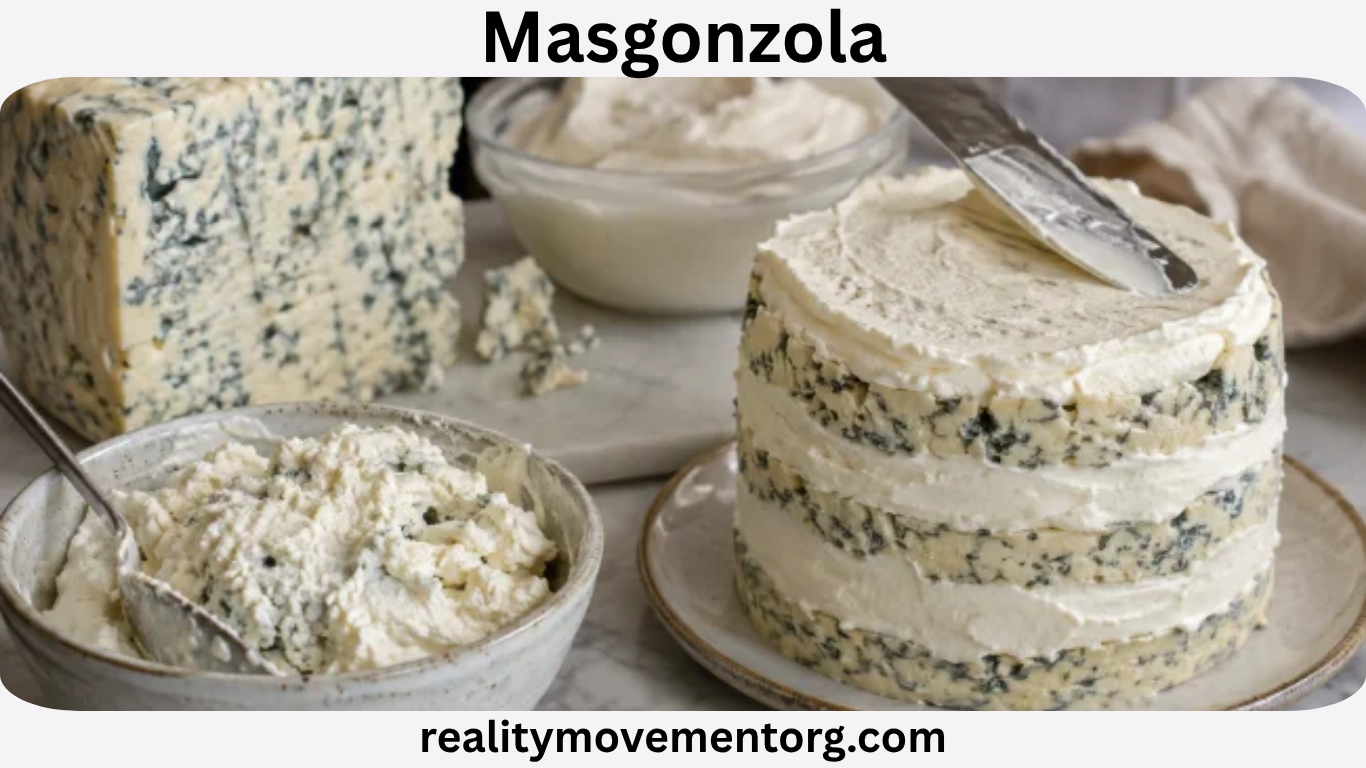
The short answer is that masgonzola is generally used to describe a creamy cheese combination involving Gorgonzola and mascarpone. However, the name does not have the same standardized identity as protected cheeses such as traditional Gorgonzola. In some food contexts, masgonzola refers specifically to a layered or blended combination of Gorgonzola and mascarpone. In other online discussions, the term is used more loosely for a creamy, mild blue-cheese style.
That difference matters. When researching masgonzola, it is easy to find descriptions that present it as though it were one universally standardized cheese with one exact recipe. The available information does not support such a simple conclusion. The more useful way to understand masgonzola is as a culinary style or cheese preparation whose character comes from combining the bold, blue-veined personality of Gorgonzola with the soft, rich texture of mascarpone.
This guide explains masgonzola in simple language. It covers its meaning, ingredients, flavor, texture, possible background, culinary uses, pairings, storage, nutrition, buying considerations, and the difference between masgonzola and Gorgonzola.
What Is Masgonzola?
Masgonzola is generally described as a cheese made by combining Gorgonzola with mascarpone. The combination brings together two very different Italian dairy products.
Gorgonzola provides the blue-cheese character. It can bring tangy, savory, earthy, and slightly pungent notes. Mascarpone provides a smooth, creamy, rich, and mild character.
When these two components are combined, the result can be much softer and creamier than many traditional blue cheeses.
The name itself appears to connect “mas” with mascarpone and “gonzola” with Gorgonzola. This makes sense from a culinary perspective because those are the two ingredients most commonly associated with the term.
A simple way to think about masgonzola is:
- Gorgonzola brings the blue-cheese flavor.
- Mascarpone brings creaminess.
- Together they create a rich and softer cheese experience.
- The exact texture and strength can depend on the preparation.
- The term is not as standardized as the name Gorgonzola.
This last point is especially important for anyone searching for masgonzola in the United States.
Is Masgonzola a Traditional Italian Cheese?
Masgonzola should not automatically be treated as a traditional protected Italian cheese in the same way as Gorgonzola.
Gorgonzola has a long-established identity and protected production rules. Masgonzola, by comparison, is commonly encountered as a combination or culinary preparation involving Gorgonzola and mascarpone.
This means there may not be one universal masgonzola recipe.
One producer might layer the cheeses. Another might blend them. A recipe may use a particular type of Gorgonzola. Another version may focus more heavily on mascarpone.
This flexibility is actually part of what makes the term interesting.
Instead of thinking of masgonzola as a cheese with one rigid formula, it is more useful to think of it as a creamy blue-cheese combination.
Where Does the Name Masgonzola Come From?
The name masgonzola appears to be a combination of the names mascarpone and Gorgonzola.
Mascarpone is a very soft Italian dairy product known for its rich, smooth consistency. It is especially famous in desserts such as tiramisu.
Gorgonzola is a famous Italian blue cheese with characteristic blue or green veining and a savory, tangy flavor.
Putting the names together creates “masgonzola,” which immediately suggests a connection between the two products.
This naming approach is also useful because it tells you something about the expected eating experience. If you know what mascarpone and Gorgonzola taste like separately, you already have a good starting point for understanding masgonzola.
What Does Masgonzola Taste Like?
Masgonzola is usually associated with a creamy, rich, slightly tangy, and savory taste.
The first sensation can be soft and buttery because of the mascarpone. As you continue eating, the Gorgonzola component brings more character.
Depending on the proportions and the particular cheese used, you may notice:
- Creamy dairy notes
- Mild sweetness
- Gentle tang
- Blue-cheese flavor
- Earthy notes
- Savory richness
- A soft finish
The strength can vary.
A version with more mascarpone may taste mild and creamy. A version with more Gorgonzola may have a stronger blue-cheese character.
This makes masgonzola appealing to people who like the idea of blue cheese but do not always enjoy very strong or pungent cheeses.
Is Masgonzola Strong Like Blue Cheese?
It can have blue-cheese character, but its overall intensity is often softened by the mascarpone component.
This is one of the most interesting things about masgonzola.
Traditional blue cheese can be challenging for someone who is not used to its flavor. Some varieties have a powerful aroma, sharp tang, and long-lasting finish.
Mascarpone changes that experience.
Its creamy and mild character can make the blue-cheese flavor feel rounder and less aggressive.
That does not mean every masgonzola preparation will be mild. The final flavor depends on the Gorgonzola used, the amount of mascarpone, how the two are combined, and how the product is handled.
What Is the Texture of Masgonzola?
Texture is one of the biggest reasons people find masgonzola interesting.
Mascarpone is naturally smooth and creamy. Gorgonzola can be soft, crumbly, or creamy depending on the style and age.
When combined, the result can have a rich, spreadable texture.
Masgonzola may be:
- Soft
- Creamy
- Spreadable
- Smooth
- Slightly crumbly in some versions
- Soft enough to melt into sauces
The texture makes it useful beyond a traditional cheese board.
It can be spread on bread, stirred into pasta, added to sauces, placed on pizza, or used to make a creamy topping.
Masgonzola vs. Gorgonzola
The easiest way to understand the difference is to focus on the additional mascarpone component.
Gorgonzola is a recognized blue cheese with its own established identity.
Masgonzola is commonly described as a combination of Gorgonzola and mascarpone.
Here is a simple comparison:
| Feature | Masgonzola | Gorgonzola |
| Main idea | Gorgonzola with mascarpone | Traditional Italian blue cheese |
| Texture | Usually softer and creamier | Can range from soft and creamy to firmer |
| Flavor | Creamy with blue-cheese notes | Tangy, savory, and blue-cheese focused |
| Intensity | Often softer | Can be mild or quite strong |
| Culinary use | Spreads, sauces, pasta, pizza, appetizers | Cheese boards, pasta, sauces, salads, pizza |
| Standardization | More flexible | More clearly defined |
The most important difference is not simply flavor. It is the way the products are defined.
Masgonzola vs. Mascarpone
Mascarpone and masgonzola are also very different.
Mascarpone is mild, rich, creamy, and often slightly sweet.
Masgonzola adds the stronger personality of Gorgonzola.
Think of it this way:
Mascarpone is the creamy foundation.
Gorgonzola is the bold flavor.
Masgonzola brings the two together.
This makes masgonzola much more savory and complex than plain mascarpone.
Why Combine Mascarpone With Gorgonzola?
The combination works because the two cheeses solve different problems.
Gorgonzola provides flavor.
Mascarpone provides balance.
If a blue cheese feels too strong, a creamy component can make it easier to enjoy.
If mascarpone feels too mild for a savory dish, Gorgonzola can add depth.
The result is not simply “more cheese.” It is a balance between intensity and softness.
This is one of the main reasons the idea of masgonzola works so well in modern cooking.
How Is Masgonzola Made?
There is no single universal process that applies to every product described as masgonzola.
A basic approach involves combining mascarpone with Gorgonzola.
Some preparations may use layers. Others may fold or blend the components.
A simplified concept looks like this:
- Select a suitable Gorgonzola.
- Prepare or obtain mascarpone.
- Combine the cheeses according to the desired texture.
- Allow the flavors to work together.
- Keep the finished product properly chilled.
Commercial production can be more controlled and may involve specific food-safety, packaging, and storage procedures.
The exact process should not be assumed to be identical for every producer.
What Kind of Gorgonzola Is Best for Masgonzola?
The choice of Gorgonzola can change the final result.
A milder Gorgonzola can create a gentle and creamy preparation.
A stronger Gorgonzola can create a more intense version.
If your goal is to make something approachable for people who are new to blue cheese, a milder Gorgonzola is usually a logical starting point.
If you love strong cheese, you may prefer a preparation with a more noticeable blue-cheese component.
The important idea is that the Gorgonzola controls much of the flavor personality.
Can Masgonzola Be Used on a Cheese Board?
Yes.
A creamy blue-cheese preparation can work very well on a cheese board.
Instead of serving it alone, pair it with foods that create contrast.
Good options include:
- Pears
- Apples
- Grapes
- Figs
- Walnuts
- Almonds
- Honey
- Crackers
- Fresh bread
- Dried fruit
Sweet foods are especially useful because they balance salty and tangy cheese.
Best Fruits to Pair With Masgonzola
Fruit and blue cheese have a long history of working well together.
For masgonzola, consider:
Pears
Pears have a soft sweetness that works naturally with creamy cheese.
Apples
Crisp apples add freshness and a little acidity.
Figs
Fresh or dried figs can add sweetness and a soft texture.
Grapes
Grapes are easy to serve and bring refreshing sweetness.
Dates
Dates are especially useful when you want a stronger sweet contrast.
Best Nuts to Pair With Masgonzola
Nuts add crunch and roasted flavor.
Some good choices include:
- Walnuts
- Pecans
- Almonds
- Hazelnuts
Walnuts are particularly appealing with blue-cheese flavors because their earthy character complements the cheese.
Masgonzola and Honey
Honey can be an excellent pairing.
The reason is simple: masgonzola can have salty, tangy, and savory notes, while honey provides sweetness.
Try a small amount of honey over the cheese rather than using too much.
The goal is balance.
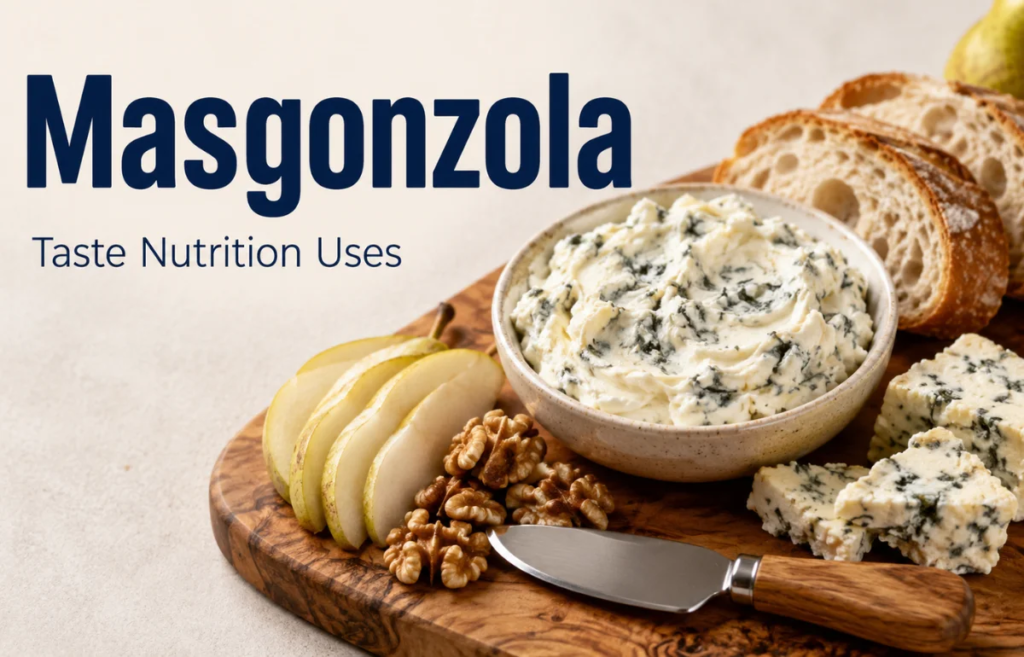
A cheese board with masgonzola, bread, walnuts, pear, and honey can make a simple but impressive appetizer.
Can You Use Masgonzola in Pasta?
Yes.
Pasta is one of the most practical ways to use a creamy blue-cheese preparation.
Masgonzola can melt into a sauce and create richness without requiring a large amount.
A simple sauce can include:
- Masgonzola
- Milk or cream
- Black pepper
- Pasta water
- Parmesan if desired
The cheese can be melted gently into the sauce.
Avoid extremely high heat because delicate dairy ingredients can separate or become oily when overheated.
Masgonzola Pasta With Mushrooms
Mushrooms are an excellent partner because they have an earthy flavor that complements blue cheese.
A simple meal could combine:
- Pasta
- Mushrooms
- Masgonzola
- Garlic
- Black pepper
- Parsley
Cook the mushrooms until they develop good color. Prepare the pasta separately. Add the cheese toward the end and loosen the sauce with a little pasta water.
The result is rich, savory, and comforting.
Masgonzola on Pizza
Masgonzola can also work well on pizza.
Because it is creamy, it can melt into small rich pockets across the surface.
Good toppings include:
- Pear
- Caramelized onion
- Mushrooms
- Prosciutto
- Walnuts
- Arugula
- Roasted vegetables
The best approach is usually moderation.
Using too much rich cheese can make a pizza heavy.
Masgonzola and Caramelized Onion
Caramelized onions bring natural sweetness.
That sweetness creates a strong contrast with the savory character of masgonzola.
This combination works on:
- Pizza
- Toast
- Flatbread
- Sandwiches
- Crostini
The contrast between sweet onion and creamy blue-cheese flavor can make a simple dish taste much more sophisticated.
Masgonzola in Risotto
Risotto is another excellent use.
The creamy texture of masgonzola fits naturally into a rice dish.
A simple method is to stir a small amount into finished risotto near the end of cooking.
You can pair it with:
- Mushrooms
- Pear
- Spinach
- Roasted squash
- Walnuts
Because risotto is already creamy, it is important not to use too much cheese.
Masgonzola With Steak
Blue cheese and steak are a classic combination, and masgonzola can offer a softer version of that pairing.
A small amount can be placed over a hot steak so that it begins to soften.
You can also make a sauce using:
- Masgonzola
- Milk or cream
- Black pepper
- Garlic
- A small amount of butter
The richness works especially well with grilled or pan-seared beef.
Masgonzola With Chicken
Chicken has a mild flavor, so a creamy blue-cheese sauce can add more character.
You can use masgonzola in:
- Stuffed chicken
- Chicken pasta
- Chicken sandwiches
- Creamy chicken skillet dishes
- Chicken and mushroom recipes
The key is to keep the sauce balanced so the cheese does not completely dominate the chicken.
Masgonzola in Salads
Masgonzola can add richness to salads.
Try combining it with:
- Mixed greens
- Pear
- Walnuts
- Apple
- Roasted beets
- Dried cranberries
A light vinaigrette can help balance the creamy cheese.
Acid is especially helpful because it cuts through rich dairy flavors.
Masgonzola and Roasted Vegetables
Roasted vegetables develop sweetness and deeper flavor.
That makes them excellent with masgonzola.
Good choices include:
- Brussels sprouts
- Carrots
- Beets
- Sweet potatoes
- Pumpkin
- Cauliflower
- Broccoli
You can crumble or spoon a small amount over the hot vegetables.
The heat will soften the cheese and create a rich topping.
Masgonzola on Bread and Crackers
Perhaps the easiest way to enjoy masgonzola is simply to spread it on bread or crackers.
Add one contrasting ingredient.
For example:
Masgonzola + pear
Masgonzola + honey
Masgonzola + walnut
Masgonzola + fig
Masgonzola + apple
This approach lets you taste the cheese without complicated cooking.
Can Masgonzola Be Used in Desserts?
The idea can work, but it requires careful balance.
Mascarpone is already widely used in desserts.
The Gorgonzola component adds a savory and tangy element.
A creative cook could experiment with small amounts alongside:
- Pear
- Fig
- Honey
- Nuts
- Dark chocolate
However, masgonzola is not a direct replacement for mascarpone in every dessert.
Its blue-cheese flavor changes the entire character of the dish.
What Drinks Pair With Masgonzola?
A rich cheese often works well with beverages that offer freshness, sweetness, or acidity.
Possible pairings include:
- Sparkling water
- Apple cider
- Pear-based drinks
- Light white wines
- Sweet dessert wines
- Some medium-bodied red wines
The best choice depends on the strength of the cheese.
A mild masgonzola can work with lighter drinks.
A stronger version may benefit from something sweeter or more full-bodied.
Is Masgonzola Healthy?
Masgonzola is a cheese-based food, so it can provide nutrients found in dairy products.
Depending on the ingredients and proportions, it may provide:
- Protein
- Calcium
- Fat
- Vitamin B12
- Vitamin A
- Other dairy nutrients
However, cheese can also be high in calories, saturated fat, and sodium.
The nutritional value will vary considerably depending on the exact product.
For that reason, it is better to think of masgonzola as a flavorful ingredient rather than a food that should be eaten in unlimited amounts.
Is Masgonzola High in Protein?
It can provide protein because Gorgonzola and mascarpone both come from dairy.
However, mascarpone is particularly rich in fat and does not provide as much protein as some firmer cheeses.
If protein is your main nutritional goal, compare the nutrition label of the specific product you are buying.
Is Masgonzola High in Calcium?
Dairy cheeses generally provide calcium, and masgonzola can contribute calcium to the diet.
The exact amount depends on the formulation and serving size.
If you are tracking calcium intake, use the nutrition facts provided for the specific product rather than relying on a general estimate.
Is Masgonzola Safe for People With Lactose Intolerance?
The answer depends on the individual and the specific product.
Gorgonzola and other aged cheeses may contain less lactose than fresh dairy products because some lactose is removed or consumed during production.
Mascarpone, however, is a fresh dairy product.
Because masgonzola can vary in composition, people with lactose intolerance should check the specific product and consider their own tolerance.
People with a medically diagnosed milk allergy should follow their healthcare professional’s guidance and check ingredient information carefully.
Is Masgonzola Pasteurized?
This depends on the specific product and producer.
Do not assume that every cheese described as masgonzola has the same production method.
If pasteurization is important to you, check the package label or ask the seller.
This is particularly important for pregnant people and others who have been advised to avoid certain unpasteurized dairy products.
How Should Masgonzola Be Stored?
Masgonzola should generally be treated as a perishable dairy product.
Keep it refrigerated and follow the storage instructions on the package.
Good practices include:
- Keep it cold.
- Keep it wrapped properly.
- Prevent contact with unwanted foods.
- Use clean utensils.
- Follow the use-by or best-before guidance.
- Avoid leaving it at room temperature for long periods.
Because cheese contains moisture and dairy fat, proper storage is important for both quality and safety.
How Long Does Masgonzola Last?
There is no single answer because products can differ.
Fresh or blended preparations may have different storage lives from aged cheeses.
Always follow the packaging instructions for a commercial product.
If you have prepared your own combination at home, it is especially important to keep it refrigerated and use good food-safety practices.
Can Masgonzola Be Frozen?
Freezing creamy dairy products can change their texture.
The cheese may become less smooth after thawing.
For this reason, freezing is usually not the first choice when you want to preserve the original creamy texture.
If the cheese will later be melted into a sauce, texture changes may matter less.
How Can You Tell if Masgonzola Has Gone Bad?
Look for changes that are outside the expected characteristics of the product.
Warning signs can include:
- Unusual odor
- Unexpected mold growth
- Slimy texture
- Major color changes
- Damaged packaging
- Swelling packaging
- An unpleasant taste
Blue cheeses naturally contain mold, so the presence of blue or green veining is not automatically a sign of spoilage.
The important issue is whether the appearance matches what the product is supposed to look like.
Can You Make a Simple Masgonzola-Style Spread at Home?
You can create a simple cheese spread inspired by masgonzola using mascarpone and Gorgonzola.
A basic approach is to combine the two cheeses until you reach the texture and flavor you like.
You might start with:
- Mascarpone
- A small amount of Gorgonzola
- Black pepper
- Optional herbs
Soften the ingredients enough to mix them without overheating.
The goal is to create a smooth spread with a noticeable but balanced blue-cheese flavor.
For food safety, keep the finished mixture refrigerated and use clean utensils.
What Is the Best Ratio of Mascarpone to Gorgonzola?
There is no universal ratio.
A useful cooking approach is to start with more mascarpone and add Gorgonzola gradually.
This lets you control the intensity.
If the flavor is too mild, add more Gorgonzola.
If it is too strong, add more mascarpone.
This method is particularly useful when serving guests because people have different preferences for blue cheese.
How to Make Masgonzola Less Strong
If your cheese mixture tastes too powerful, you can soften it by adding more mascarpone.
You can also pair it with:
- Honey
- Pear
- Apple
- Cream
- Milk
- Mild bread
- Roasted vegetables
These ingredients help balance the sharpness.
How to Make Masgonzola More Flavorful
If you want stronger flavor, increase the Gorgonzola component.
You can also add complementary ingredients such as:
- Black pepper
- Garlic
- Walnuts
- Caramelized onions
- Fresh herbs
Avoid adding too many strong flavors at once.
The best dishes usually have one main flavor and a few supporting ingredients.
Why Masgonzola Works Well in Modern Cooking
One reason the masgonzola concept is interesting is that it solves a common cooking problem.
Also read:BacktoFrontShow: The Back to Front Show Podcast, History, Episodes, Hosts, and Legacy
Strong cheese has character, but it can overwhelm a dish.
Very mild cheese is easy to use, but it may not add enough personality.
Masgonzola sits between these two ideas.
It can provide blue-cheese complexity while maintaining a creamy texture.
That makes it useful for home cooks who want gourmet flavor without making a dish too aggressive.
Masgonzola for People Who Do Not Like Blue Cheese
Masgonzola may be worth trying for people who normally find blue cheese too intense.
The mascarpone component can make the overall experience softer and richer.
However, people have different taste preferences.
If you strongly dislike the flavor of blue cheese, masgonzola may still taste too strong.
A mild preparation is the best place to start.
Masgonzola for Blue Cheese Lovers
Blue-cheese fans may appreciate masgonzola for a different reason.
Instead of replacing the blue-cheese character, mascarpone adds a new texture.
It can turn a bold cheese into something more spreadable and creamy.
This makes it useful in sauces, pasta, and other recipes where a traditional crumbly blue cheese might not provide the same consistency.
How Masgonzola Fits Into a US Kitchen
For American home cooks, the biggest challenge may be finding a product specifically labeled “masgonzola.”
Because the term is not as standardized as well-known cheeses, a store may sell a similar preparation under another name.
You may encounter descriptions involving:
- Gorgonzola and mascarpone
- Creamy Gorgonzola
- Gorgonzola spread
- Blue cheese and mascarpone
- Mascarpone blue-cheese blend
Reading the ingredients can be more useful than focusing only on the product name.
What to Look for When Buying Masgonzola
If you find a product labeled masgonzola, check:
- Ingredients
- Dairy source
- Pasteurization information
- Storage instructions
- Nutrition facts
- Serving size
- Use-by date
- Country of origin
- Producer information
If the product is a combination of mascarpone and Gorgonzola, the ingredient list should help you understand what you are actually buying.
Why the Exact Label Matters
The name alone may not tell you everything.
One product could be soft and mild.
Another could be much stronger.
One may be sold as a layered cheese.
Another may be a spread.
One may contain additional ingredients.
This is why experienced food buyers read the label rather than relying only on a familiar-sounding name.
Masgonzola and Cheese Boards for Beginners
If you are new to blue cheese, do not serve masgonzola with several other extremely strong foods.
Instead, create balance.
A beginner-friendly cheese board might include:
- Masgonzola
- Mild cheddar
- Pear
- Grapes
- Crackers
- Walnuts
- Honey
This gives you several textures and flavors without making everything intense.
Masgonzola for Entertaining Guests
Masgonzola can make a good party ingredient because it can be used in both simple and more elaborate ways.
You could serve it as:
- Crostini
- A cheese-board spread
- A pasta sauce
- A pizza topping
- A vegetable topping
- A dip
Its creamy texture makes it easy to serve.
Common Mistakes When Cooking With Masgonzola
One common mistake is using too much.
Rich cheese can quickly dominate a dish.
Another mistake is cooking it at extremely high heat.
Gentle heating is usually better for creamy cheese sauces.
A third mistake is pairing it only with other rich ingredients.
Adding acidity, fruit, vegetables, or fresh herbs can make the final dish more balanced.
The Importance of Balance
Good cooking is often about contrast.
Masgonzola is rich.
So it benefits from freshness.
Masgonzola can be salty.
So it benefits from sweetness.
Masgonzola can be creamy.
So it benefits from crunch.
Masgonzola can be tangy.
So it benefits from mild ingredients.
This simple way of thinking can help you create better recipes without needing complicated cooking techniques.
Masgonzola With Pear and Walnut Recipe Idea
For a very simple appetizer, spread masgonzola onto a small piece of toasted bread.
Add a thin slice of pear.
Finish with a walnut piece and a small drop of honey.
You get:
- Creaminess from the cheese
- Sweetness from the pear
- Crunch from the walnut
- Extra sweetness from the honey
It is simple but has several layers of flavor.
Masgonzola Pasta Recipe Idea
Cook your favorite pasta.
While the pasta cooks, gently warm a small amount of milk or cream.
Add masgonzola and stir until smooth.
Add black pepper.
Use a little pasta water to adjust the consistency.
Toss the sauce with the pasta.
Add mushrooms or spinach if desired.
The result is a quick comfort meal that does not require many ingredients.
Masgonzola Pizza Recipe Idea
Start with a pizza base.
Add a modest amount of masgonzola.
Add caramelized onions and thin pear slices.
Bake until the crust is cooked and the cheese is soft.
Finish with a small amount of arugula after baking.
This works because sweet, creamy, earthy, and fresh flavors are all present.
Is Masgonzola the Same as Creamy Gorgonzola?
Not necessarily.
The terms can sometimes overlap in informal food discussions, but a product specifically described as masgonzola is generally associated with the combination of mascarpone and Gorgonzola.
“Creamy Gorgonzola” can simply describe the natural texture of a particular Gorgonzola.
Always check the ingredients if the distinction matters.
Is Masgonzola the Same as Gorgonzola Dolce?
No.
Gorgonzola Dolce is a specific style of Gorgonzola known for a softer, sweeter, and creamier profile.
Masgonzola is generally associated with combining Gorgonzola and mascarpone.
They may share some flavor characteristics, but they are not automatically the same product.
Is Masgonzola the Same as Blue Cheese?
No.
Blue cheese is a broad category.
Gorgonzola is one type of blue cheese.
Masgonzola is generally a preparation associated with Gorgonzola and mascarpone.
So the relationship can be understood as:
Blue cheese → Gorgonzola → component used in masgonzola.
This is a useful way to understand the terminology.
Why the Word Masgonzola Can Be Confusing
The biggest problem is that the term is not always used consistently online.
Some pages describe it as a specific cheese blend.
Other discussions use it more like a general creative term for a creamy blue cheese.
This can make online information confusing.
The safest interpretation is to focus on the ingredients and context.
If a recipe says masgonzola, check whether it means a mixture of mascarpone and Gorgonzola.
What Makes Masgonzola Different?
Its main feature is balance.
Gorgonzola provides intensity.
Mascarpone provides softness.
Together, they create a cheese experience that can be both rich and flavorful.
This balance gives masgonzola a practical advantage in cooking.
It can be used where you want blue-cheese character but also need a smooth texture.
Final Thoughts on Masgonzola
Masgonzola is best understood as a creamy cheese preparation associated with Gorgonzola and mascarpone. It combines the savory, tangy personality of blue cheese with the smooth and rich texture of mascarpone. Although the term is sometimes presented as though it were one fixed traditional cheese, its use is more flexible, and the exact ingredients, proportions, and texture can vary.
For home cooks, that flexibility can actually be useful. Masgonzola can be spread on bread, added to pasta, melted into sauces, used on pizza, paired with fruit and nuts, or served as part of a cheese board. Its strongest advantage is the balance between bold flavor and creamy texture.
If you are trying masgonzola for the first time, start with a small amount and pair it with foods such as pear, apple, honey, walnuts, mushrooms, or caramelized onions. These ingredients can soften the stronger notes and make the cheese easier to enjoy.
When buying it, pay attention to the ingredient list, storage instructions, nutrition information, and the specific description on the package. Because the term may not describe one universally standardized product, the label is more useful than the name alone.
Overall, masgonzola is an interesting example of how traditional ingredients can be combined to create a new culinary experience. It offers a practical middle ground for people who enjoy creamy cheeses and want to explore the deeper flavors of blue cheese without making every dish intensely sharp.
Frequently Asked Questions About Masgonzola
Is masgonzola a real cheese?
Masgonzola is commonly used to describe a combination or style involving Gorgonzola and mascarpone. It does not have the same standardized identity as established protected cheeses such as traditional Gorgonzola.
What is masgonzola made from?
Masgonzola is generally associated with Gorgonzola and mascarpone. The exact proportions and preparation can vary.
Does masgonzola taste like Gorgonzola?
It can have the recognizable tangy and savory character of Gorgonzola, but the mascarpone component makes the overall taste softer, richer, and creamier.
Is masgonzola good for people who dislike strong cheese?
It may be a good starting point because the creamy mascarpone can soften the stronger blue-cheese character. However, it can still have a noticeable blue-cheese taste.
Can masgonzola be used instead of cream cheese?
It can work as a substitute in some savory recipes, but it will have a stronger and more complex flavor than ordinary cream cheese.