BacktoFrontShow: The Back to Front Show Podcast, History, Episodes, Hosts, and Legacy
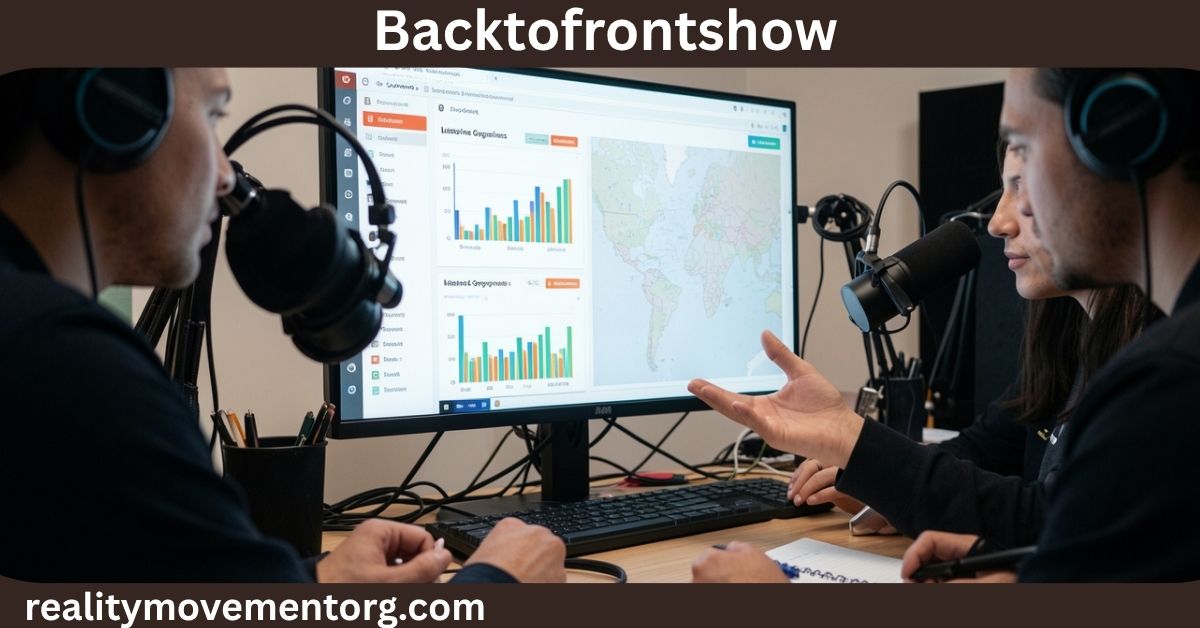
BacktoFrontShow, formally known as The Back to Front Show, was a web and technology podcast created by web industry professionals Keir Whitaker and Kieran Masterton. The show focused on web design, web development, startups, technology news, and the wider culture surrounding the internet industry. It became known for mixing useful industry discussion with relaxed conversation, humor, opinions, and stories from the people working in the field.
The podcast began in January 2013 and developed a long-running archive of episodes. Podcast directories list more than 100 episodes, with episodes generally running for around 40 to 50 minutes.
For people discovering BacktoFrontShow today, the name can be slightly confusing. It may look like a modern technology website or a new digital platform. In reality, the best-documented meaning of BacktoFrontShow is its connection to The Back to Front Show, a podcast centered on the web industry.
The show is particularly interesting because it captured a period when web development was changing rapidly. Responsive design, new JavaScript tools, startups, ecommerce, social platforms, content publishing, mobile technology, and new business models were reshaping the internet.
Rather than simply discussing code, the hosts looked at the wider industry.
That included technology.
It included design.
It included business.
It included careers.
It included internet culture.
And, importantly, it included the human side of working in technology.
This article explores BacktoFrontShow in detail, including its meaning, history, hosts, format, subjects, notable episodes, importance to the web community, and what modern listeners can still learn from its archive.
What Is BacktoFrontShow?
BacktoFrontShow refers primarily to The Back to Front Show, a web industry podcast hosted by Keir Whitaker and Kieran Masterton.
The podcast described itself as being focused on web and technology industry conversation. SoundCloud’s archive identifies the hosts as web development veterans and says episodes typically explored current developments in the web and technology industries for roughly 40 to 50 minutes.
Podcast directories similarly describe the show as covering web design, web development, startups, technology news, and how-to subjects.
This makes BacktoFrontShow more than a simple programming podcast.
Shiva Lord
It was a discussion-based show about the broader web ecosystem.
The hosts could move from a technical subject to design, business, careers, online culture, or a completely unexpected side discussion.
Also read:Coomer Site Not Working: Complete Troubleshooting Guide for Common Errors in 2026
That informal style became part of its identity.
The Back to Front Show Name
The official title was The Back to Front Show, while BacktoFrontShow and Back to Front Show have also been used when referring to the podcast online.
The name itself reflects the show’s interest in looking at different sides of the web industry.
The podcast was not designed as a formal classroom.
Instead, it was conversational.
The hosts discussed what they were seeing in the industry, reacted to technology developments, shared opinions, and explored interesting stories.
This approach made the show accessible to people who worked in technology as well as people who simply enjoyed learning about the internet.
When Did BacktoFrontShow Begin?
The podcast began on January 19, 2013, according to podcast directory records.
That date is important because the web industry of 2013 looked very different from today’s technology environment.
Smartphones were becoming central to online experiences.
Responsive websites were becoming increasingly important.
Social networks were growing rapidly.
Cloud services were changing how developers built applications.
Ecommerce platforms were expanding.
Startups were receiving significant attention.
Web designers and developers were adapting to a quickly changing environment.
BacktoFrontShow entered this environment at an interesting time.
Why 2013 Was an Important Time for Web Development
In 2013, websites were becoming more complex and more interactive.
Developers were working with increasingly capable browsers.
Mobile browsing was changing how websites were designed.
Designers were moving away from fixed desktop-only layouts.
JavaScript was becoming more important for interactive experiences.
Online businesses were experimenting with new ways to sell products and communicate with customers.
The web industry was also becoming more professional.
There were established development agencies, independent designers, freelancers, startup teams, ecommerce specialists, and large technology companies.
A podcast discussing these changes could therefore cover a very wide range of subjects.
Who Hosted BacktoFrontShow?
The two main hosts were Keir Whitaker and Kieran Masterton.
The show’s archive consistently identifies them as its hosts.
Their professional backgrounds helped shape the podcast.
Keir Whitaker has been associated with web design, ecommerce, and technology. His professional profile identifies him as a UK-based Shopify Designer Advocate and co-host of The Back to Front Show.
Kieran Masterton was also an experienced member of the web industry, and the podcast frequently reflected his interest in technology, development, business, and the wider digital world.
The combination of industry experience and informal conversation was one of the show’s strengths.
Keir Whitaker and His Role in the Show
Keir Whitaker brought experience from the web and ecommerce world.
His later professional work included involvement with Shopify, and his published work covered subjects related to ecommerce, web development, design, and technology.
That background helped give BacktoFrontShow a practical perspective.
Rather than discussing technology only from a theoretical point of view, the conversations could connect technology with real industry work.
This is useful because web development is rarely just about writing code.
Developers and designers also need to understand:
- Users
- Businesses
- Clients
- Products
- Marketing
- Communication
- Project management
- Industry trends
The podcast often operated in this larger space.
Kieran Masterton and His Contribution
Kieran Masterton co-hosted the podcast with Whitaker.
The show’s episode archive shows him participating in conversations about web development, technology, internet culture, startups, design, and many lighter subjects.
The relationship between two hosts gave the podcast its conversational character.
Instead of listening to a single presenter deliver information, audiences heard two people react to subjects and to each other.
That made the show feel more like a discussion among colleagues.
What Topics Did BacktoFrontShow Cover?
BacktoFrontShow covered a broad range of subjects.
The central themes included:
- Web development
- Web design
- Startups
- Technology
- Ecommerce
- Online publishing
- Digital products
- Internet culture
- Industry news
- Careers
- Creative work
The show did not limit itself to technical tutorials.
That distinction is important.
Someone searching for a step-by-step coding lesson might not find every episode useful.
Someone interested in how technology professionals think about their industry could find the discussions much more valuable.
Web Design on BacktoFrontShow
Web design was one of the podcast’s major areas of interest.
During the period when the show was active, web design was going through major changes.
Designers were adapting to:
- Smartphones
- Tablets
- Responsive layouts
- High-resolution displays
- New browsers
- Faster connections
- New interface patterns
- Changing user expectations
The podcast’s broad industry perspective made these developments suitable discussion topics.
Web Development and BacktoFrontShow
Web development was another core subject.
The hosts discussed the changing tools, practices, and culture of web development.
This could include the relationship between front-end and back-end development.
The title itself suggests an interest in the entire web stack rather than just one side.
Shopify’s historical roundup of web design podcasts described The Back to Front Show as covering everything from back-end technology through front-end development, while also discussing the wider industry.
That broad scope helped distinguish it from narrowly technical podcasts.
Startups and Entrepreneurship
Startups were also part of the show’s subject area.
The technology industry has always had a strong relationship with entrepreneurship.
A developer may build a product.
A designer may create a new service.
A small team may launch an online company.
An idea can become a business.
The podcast explored this wider ecosystem rather than treating technology as something separate from business.
This is particularly useful for modern readers because today’s technology workers are increasingly expected to understand product thinking and business goals.
Technology News
BacktoFrontShow also reacted to technology developments.
This made it a product of its time.
Technology news changes quickly.
A company launches a product.
A platform changes direction.
A new business model appears.
A popular service changes its policies.
A new design trend becomes popular.
The hosts could discuss these developments through the lens of people working in the industry.
Why the Podcast’s Informal Style Mattered
One of the defining characteristics of BacktoFrontShow was its informal tone.
The SoundCloud description says the hosts would discuss current happenings in web and technology and “chew the fat” for around 40 to 50 minutes.
This means the show was not designed to sound like a corporate presentation.
The relaxed style allowed room for humor, disagreement, side stories, and personal opinions.
That can be valuable because technology professionals do not always experience the industry in a formal way.
They have frustrations.
They have strange client stories.
They have favorite tools.
They disagree about technology.
They make mistakes.
They change careers.
A conversational podcast can capture those realities.
BacktoFrontShow and Web Industry Culture
The podcast was also a record of web industry culture.
Technology is not only about tools.
It has communities.
It has trends.
It has personalities.
It has arguments.
It has inside jokes.
It has conferences.
It has changing ideas about how work should be done.
BacktoFrontShow captured some of this atmosphere.
This is one reason old technology podcasts can be surprisingly valuable today.
They show how people thought about the future before that future arrived.
The Importance of Looking Back
Technology changes so quickly that older discussions can seem outdated.
But historical perspective can be useful.
A 2013 conversation about websites may use technologies that are no longer popular.
However, the underlying questions may remain relevant.
How should websites serve users?
How should teams work?
How should businesses respond to new technology?
How should developers keep learning?
How should products respond to customer needs?
These questions have not disappeared.
Only the tools have changed.
BacktoFrontShow as a Snapshot of Web History
The podcast can therefore be viewed as a snapshot of a particular period.
It captures a time when the modern web was developing rapidly.
The show discussed products, ideas, people, and industry changes as they happened.
Today, those discussions can help researchers and technology professionals understand how the industry viewed itself during that period.
This is a different kind of value from a modern tutorial.
A tutorial teaches a skill.
An old podcast can teach context.
The Show’s Episode Format
Episodes generally lasted around 40 to 50 minutes.
SoundCloud describes this approximate length, while podcast directories give an average audio length of about 48 minutes.
That length is long enough for a genuine discussion without becoming an extremely long interview.
Episodes could contain:
- Industry news
- Personal stories
- Technology discussion
- Links
- Opinions
- Interviews
- Humor
- Side conversations
The show notes often provided additional links for listeners who wanted to explore a subject further.
Episode 46 and the Future of Medium
One example is Episode 46, titled “The Future of Medium?”
The episode was published on January 19, 2023, according to the current archive page, although the underlying podcast material belongs to the show’s earlier publishing history. The episode discussed Kieran’s move behind the camera, some personal conversation, and the future of Medium following a major announcement involving Ev Williams.
The subject is a good example of the show’s approach.
It combines:
A technology platform.
A business question.
Industry news.
Personal conversation.
And broader discussion about online publishing.
Episode 43 and Oliver Lindberg
Episode 43 focused partly on Oliver Lindberg.
The hosts discussed the internet personality and journalist while also moving into topics including Instagram’s logo, the rise of .io domains, books, and startup ideas.
This illustrates how the show could move between subjects.
A single episode was not always built around one narrow technical problem.
Instead, it reflected the way technology professionals naturally discuss the industry.
One topic leads to another.
A news story leads to a personal experience.
A product leads to a business question.
That is part of the podcast’s charm.
Episode 40 and the Show’s History
Episode 40 marked an important milestone.
The episode notes say that three years earlier Keir and Kieran had started the project and were reflecting on the journey.
This gives us an insight into the longevity of the podcast.
Maintaining a podcast for several years is not easy.
It requires:
Planning.
Recording.
Editing.
Publishing.
Promotion.
Topic selection.
Audience engagement.
The fact that the show continued through many episodes is itself notable.
Episode 41 and Online Content
Episode 41 explored the issue of ad blockers and paid content, according to the archived episode listing.
This is another example of a topic that remains relevant.
The relationship between users and online publishers has changed dramatically.
Websites need revenue.
Users want fast, useful experiences.
Advertising supports many free services.
Ad blockers can change how websites earn money.
Subscription models offer another approach.
These questions remain important even though the technology has changed.
Episode 50 and the Return of the Show
One of the most interesting entries is the 50th episode, “Retro Tech Rabbit Warren.”
Podcast platforms describe it as a return after a long break and say the hosts had nearly given up hope of recording the landmark episode. It also referenced the global pandemic and Kieran finding his microphone again.
The episode looked back on the hosts’ lives, revisited old technology documentaries, and included several humorous side discussions.
This episode shows another important characteristic of BacktoFrontShow.
The podcast was not only about technology.
It was also about the people making it.
BacktoFrontShow and Humor
Humor was part of the show’s personality.
The episode archive contains titles and subjects that clearly do not sound like conventional technical lectures.
For example, the archive includes discussions involving “Daps,” tiny houses, motorway bridges, and other unexpected subjects.
This variety helped make the show more personal.
Technology professionals are people first.
A good technology podcast can teach something while still being entertaining.
BacktoFrontShow and Interviews
The show also included guest-focused episodes and interviews.
SoundCloud lists episodes featuring people such as Kurt Elster, Craig Lockwood, and Marc Thiele.
Guests add another layer to a technology podcast.
Instead of hearing only the hosts’ opinions, listeners can hear different experiences.
A guest may have a different career.
They may work in another part of the industry.
They may have built a different type of business.
They may approach design or development differently.
This diversity makes an archive more valuable.
BacktoFrontShow and Industry Networking
Podcasts can create connections within professional communities.
When hosts interview industry figures, they introduce listeners to people they might not otherwise encounter.
This can help audiences discover:
- Designers
- Developers
- Entrepreneurs
- Writers
- Product specialists
- Startup founders
- Technology advocates
In the early years of web podcasting, this was especially valuable.
The modern internet has made professional networking easier, but podcasts remain an effective way to hear how experienced people think.
The Importance of the Show’s UK Perspective
The Back to Front Show had a British perspective.
Shopify’s description specifically noted that it approached the web industry from a UK perspective and was recorded in southwest England.
This matters because technology culture is not identical everywhere.
The US technology industry has its own culture.
The UK has another.
Europe has its own regulatory and business environment.
Different regions approach work, design, entrepreneurship, and technology differently.
The UK perspective gave the show a distinct personality.
Why American Readers Can Still Learn From It
Although the show had a British identity, its subject matter was international.
Also read:Charles Donald Fegert: Biography, Career, Marriage to Barbara Eden, Family, and Life Story
The web is global.
Developers use similar programming languages.
Designers face similar usability problems.
Businesses deal with similar digital challenges.
Startups face similar questions about customers and products.
Therefore, American readers and listeners can still find value in the discussions.
The geographic perspective is different, but many technology problems are shared.
BacktoFrontShow and Ecommerce
Ecommerce became an increasingly important part of the web during the podcast’s active years.
Keir Whitaker’s professional work was closely connected to ecommerce and Shopify, which added another valuable perspective to the show.
Ecommerce involves many areas:
Website design.
User experience.
Payments.
Product pages.
Customer service.
Marketing.
Analytics.
Mobile shopping.
Performance.
Security.
This makes ecommerce a natural subject for a broad web industry podcast.
What BacktoFrontShow Can Teach Modern Developers
Modern developers should not treat an old podcast as a current technical manual.
Programming tools change.
Frameworks become outdated.
Platforms change.
Best practices evolve.
However, the show can teach broader lessons.
One lesson is that technology is always changing.
Another is that developers need to understand business.
Another is that communication matters.
Another is that the web industry has always involved more than code.
These lessons remain relevant.
Learning From Outdated Technology
An older episode may mention tools that no longer exist.
That does not automatically make the discussion useless.
Technology history teaches an important lesson:
No tool is guaranteed to remain dominant.
A framework can become popular and later decline.
A company can lead a market and later lose its position.
A platform can change its strategy.
A new technology can replace an old one.
Developers who understand this may become more adaptable.
BacktoFrontShow and Lifelong Learning
The web industry requires continuous learning.
Developers and designers cannot assume that what they learned five years ago will be enough forever.
The same applies today.
AI tools are changing workflows.
Cloud platforms continue to evolve.
Web standards change.
Security threats change.
User expectations change.
New business models appear.
The podcast’s focus on industry discussion reflects this need for continuous awareness.
BacktoFrontShow and Professional Curiosity
Curiosity is one of the most valuable qualities in technology.
A curious professional asks:
Why does this work?
Why did this product fail?
Why do users prefer this design?
Why did a company change direction?
What is happening in the industry?
What could happen next?
Podcasts are particularly good for developing this type of curiosity because they expose listeners to conversations outside their immediate job.
BacktoFrontShow and Career Development
A technology career is not only about technical skills.
Professionals also need:
Communication.
Problem-solving.
Business awareness.
Networking.
Creativity.
Adaptability.
Decision-making.
Understanding how other professionals think can help develop these skills.
That is another reason an industry podcast can be useful even when its technical content is old.
Why the Archive Still Matters
The archive is valuable because it represents a period in web history.
It contains conversations that might otherwise disappear.
Websites change.
Companies disappear.
Products are renamed.
Industry trends are forgotten.
Podcasts can preserve voices from a particular time.
For researchers, writers, developers, and technology historians, this type of archive can provide useful context.
BacktoFrontShow and Digital Preservation
Digital preservation is becoming increasingly important.
A webpage can disappear.
A podcast feed can break.
An old domain can expire.
A social account can be deleted.
When archived material remains available through platforms and historical websites, it provides a record of the past.
BacktoFrontShow demonstrates this value.
Its episode listings, audio archives, and show notes preserve part of the web industry’s history.
How to Find BacktoFrontShow Episodes
The original BacktoFrontShow website contains archived episode pages and show notes.
SoundCloud also maintains a Back to Front Show profile with archived audio.
Podcast directories such as Podcast App, Listen Notes, and iVoox also list episodes and descriptions.
Because podcast availability can change over time, listeners may find that some platforms have older episodes while others do not.
How to Choose an Episode
If you are interested in web history, start with older episodes.
If you are interested in industry culture, choose episodes involving guests.
If you are interested in publishing, look for discussions about Medium and online content.
If you are interested in technology history, look for episodes discussing older platforms and tools.
If you want something more relaxed, choose episodes with personal or humorous subjects.
The variety is part of the appeal.
What Makes BacktoFrontShow Different From a Technical Course?
A course has a structured learning objective.
A podcast is more open-ended.
A course might teach you how to build a website.
BacktoFrontShow might discuss why people build websites, how the industry is changing, what businesses expect from developers, and what technology professionals are talking about.
Both formats have value.
They simply serve different purposes.
BacktoFrontShow Compared With Modern Technology Podcasts
Modern technology podcasts often focus on:
AI.
Cloud computing.
Cybersecurity.
Startups.
Software engineering.
Venture capital.
Product management.
The Back to Front Show belonged to an earlier stage of this broader podcast culture.
Its focus on web development and design reflects the priorities of its time.
But the discussion format feels familiar.
Technology professionals still use podcasts to understand trends, debate ideas, and learn from experienced people.
Why Some Old Podcasts Become More Valuable With Time
A current podcast tells you what people are thinking now.
An old podcast can show you what people thought before the future became obvious.
That difference is valuable.
For example, listening to an older discussion about a technology that later became important can reveal what people misunderstood.
It can also reveal predictions that were correct.
This teaches an important lesson:
The future is difficult to predict.
BacktoFrontShow and Technology Predictions
Technology discussions often contain predictions.
Some become true.
Others do not.
That is normal.
People make predictions using the information available at the time.
Markets change.
Companies change strategy.
Users change behavior.
Unexpected technologies appear.
This makes old technology podcasts useful for learning about uncertainty.
The Human Side of BacktoFrontShow
Perhaps the biggest strength of the podcast was its human side.
Technology can sometimes be presented as a collection of tools.
But real technology work involves people.
People make decisions.
People disagree.
People make mistakes.
People change jobs.
People start businesses.
People become tired.
People experiment.
People learn.
BacktoFrontShow captured some of this reality.
Why the “Banter” Style Worked
The show’s descriptions repeatedly emphasize informal industry discussion and banter.
Banter can make difficult subjects easier to approach.
A listener does not feel like they are attending a lecture.
Instead, they feel like they are listening to experienced colleagues talk.
This can make technical subjects more approachable for beginners.
BacktoFrontShow for Beginners
A beginner may not understand every technical reference.
That is normal.
However, the broader discussions can still be useful.
A beginner can learn:
What web developers care about.
What designers discuss.
How startups think.
How technology companies make decisions.
How the industry changes.
What professional culture looks like.
The podcast can therefore be useful as a supplement to more structured learning.
BacktoFrontShow for Experienced Professionals
Experienced developers may get a different type of value.
They can compare older industry conversations with today’s environment.
They may recognize technologies they used years ago.
They may remember old debates.
They may notice how much the industry has changed.
This creates a sense of professional history.
What the Podcast’s Legacy Looks Like
The Back to Front Show’s main legacy is not necessarily one specific technology.
It is the archive of conversation around web development and technology.
The show documented how professionals discussed their industry.
It connected people.
It highlighted ideas.
It preserved stories.
It captured a particular period of internet culture.
That is meaningful.
BacktoFrontShow in the Context of Web History
The history of the web is often told through companies and technologies.
We hear about browsers.
Search engines.
Social networks.
Smartphones.
Cloud platforms.
But industry culture is equally important.
Developers and designers are the people who actually build the web.
Their conversations reveal what working in the industry felt like.
BacktoFrontShow provides a small but useful window into that experience.
What Modern Businesses Can Learn From BacktoFrontShow
Businesses can learn several broad lessons from the podcast.
Technology changes.
Customer expectations change.
Products need to adapt.
Communication matters.
Industry relationships matter.
Curiosity matters.
Humor can help teams communicate.
Most importantly, companies should not assume that today’s successful tools will remain successful forever.
What Modern Creators Can Learn
Creators can learn from the show’s consistency.
Building an audience takes time.
A podcast does not need to be perfect from the first episode.
A creator improves through practice.
Recording quality improves.
Interview skills improve.
Topic selection improves.
Communication improves.
The long archive demonstrates the value of continuing to create.
What Modern Podcasters Can Learn
The show also offers lessons for podcast creators.
A strong podcast does not always need expensive production.
SoundCloud’s description even refers to the use of Blue Yeti microphones and a less-than-perfect Skype connection.
The important elements are:
Good conversation.
Interesting topics.
Consistent publishing.
Distinct personalities.
Useful information.
A recognizable identity.
Technology can improve production, but good content remains important.
BacktoFrontShow and Authenticity
Authenticity is especially valuable in conversational media.
People can tell when a discussion feels overly scripted.
The Back to Front Show’s informal style allowed personality to come through.
That made the hosts more relatable.
Modern creators can learn from this.
Professional does not have to mean emotionless.
A knowledgeable person can still be funny, uncertain, curious, or opinionated.
The Value of Diverse Topics
The podcast did not remain locked inside one narrow subject.
This variety helped keep the show interesting.
It also reflected real life.
A developer may care about technology.
They may also care about music.
Travel.
Business.
Food.
Books.
Design.
Photography.
Internet culture.
People are not defined by one job title.
The podcast reflected that reality.
Is BacktoFrontShow Still Active?
The historical podcast archive identifies “Retro Tech Rabbit Warren” as the latest episode dated December 17, 2020, while the current website contains newer pages and material under the Back to Front Show name.
This distinction is important.
The existence of newer website articles does not necessarily mean the original podcast has returned as an active weekly or regularly updated show.
The documented podcast archive suggests that the original podcast’s major run had already become intermittent by this period.
Readers should therefore distinguish between the original podcast archive and newer web content using the same or similar branding.
BacktoFrontShow Today
Today, someone searching for BacktoFrontShow may encounter both historical podcast material and newer websites using the Back to Front Show name.
The original, well-documented podcast is associated with Keir Whitaker and Kieran Masterton and the web industry.
There are also newer sites using the phrase “Back to Front Show” for broader podcast and content projects.
Because these may not represent the same project, readers should check the hosts, dates, episode information, and official archive before assuming that all material belongs to the original podcast.
How to Avoid Confusion When Searching BacktoFrontShow
Look for the original hosts.
Check the date.
Look for web-development topics.
Compare the episode titles.
Check the original domain and archived material.
Do not assume that every website using “Back to Front Show” is connected to the original podcast.
This is especially important because the name is generic enough to be reused.
Why Accurate Identification Matters
If you are writing about a podcast, accuracy matters.
Mixing two different projects can create false information.
For example, a newer site might publish an article about a modern topic under the same name.
That does not prove the original podcast discussed that subject.
A reliable article should separate historical facts from newer material.
The Best Way to Understand BacktoFrontShow
The simplest way to understand BacktoFrontShow is this:
It was a web industry podcast.
It was hosted by Keir Whitaker and Kieran Masterton.
It began in 2013.
It covered web design, development, technology, startups, and internet culture.
It used a relaxed conversational format.
It featured guests and industry discussions.
Its archive provides a snapshot of web industry culture during an important period of internet development.
That is the core story.
Why BacktoFrontShow Still Matters
Technology changes quickly, but history remains useful.
BacktoFrontShow gives modern readers an opportunity to look backward.
It shows what web professionals were discussing.
It shows which issues mattered.
It shows how technology culture sounded.
It demonstrates how unpredictable technology can be.
And it reminds us that today’s “normal” technology was once new, uncertain, and debated.
That makes the archive valuable beyond simple entertainment.
Conclusion
BacktoFrontShow, better known as The Back to Front Show, was a web industry podcast hosted by Keir Whitaker and Kieran Masterton. It began in January 2013 and focused on web design, web development, startups, technology news, ecommerce, and the broader culture surrounding the internet industry. Podcast records describe it as an informal show, with episodes generally lasting around 40 to 50 minutes.
What made the show interesting was its broad approach. It was not simply a technical podcast about programming languages or development tools. The hosts discussed the people, businesses, products, trends, and cultural changes shaping the web. They also brought humor and personal stories into the conversation, making the show feel more like a discussion between experienced industry colleagues.
The historical value of BacktoFrontShow is also important. The podcast began during a major period of change in web development. Mobile devices were reshaping websites, responsive design was becoming increasingly important, startups were attracting attention, ecommerce was growing, and web professionals were adapting to rapidly changing technologies.
Listening to those discussions today can provide a different kind of education. Some technical details may be outdated, but the broader lessons remain relevant. Technology changes. Businesses adapt. Products evolve. Users change their expectations. Professionals need to keep learning.
The show’s archive also demonstrates the value of conversational media. Not every useful technology lesson comes from a formal course. Sometimes people learn by listening to experienced professionals discuss what they have seen, what they believe, what they got wrong, and what they expect next.
For modern developers, designers, entrepreneurs, creators, and technology enthusiasts, BacktoFrontShow is therefore worth viewing as both a podcast archive and a small piece of web industry history.
Its greatest lesson may be simple: the technology industry is always moving, but the need for curiosity, communication, adaptability, and thoughtful discussion does not disappear.
FAQs About BacktoFrontShow
What is BacktoFrontShow?
BacktoFrontShow refers primarily to The Back to Front Show, a web and technology industry podcast hosted by Keir Whitaker and Kieran Masterton. The podcast covered web design, development, startups, technology, ecommerce, and internet culture.
When did The Back to Front Show start?
The podcast began on January 19, 2013, according to podcast directory records. It continued through multiple years and eventually became an intermittent production.
Who hosted BacktoFrontShow?
The main hosts were Keir Whitaker and Kieran Masterton. Their professional experience in the web industry strongly influenced the show’s subjects and conversational style.
What topics did BacktoFrontShow cover?
The show covered web design, web development, startups, technology news, ecommerce, online publishing, digital products, industry culture, and other subjects connected with the technology world.
Can people still find BacktoFrontShow episodes?
Yes. Historical episodes and show information remain available through the original BacktoFrontShow website and several podcast platforms, including SoundCloud and podcast directories. Availability can vary by platform, so checking more than one archive may be useful.